
The single most common way a man ends up with good underwear is that his partner bought it for him.
That's not a criticism. Buying underwear as a gift shows up as a pattern in our customer data constantly. "She bought me a pair and I never went back." "Would never have bought these myself." Not occasional exceptions. Recurring language from men who found out the difference was real because someone else removed the effort of finding out.
The data behind it is larger than just us. Two-thirds of British men rely on partners or mothers to buy their underwear. A 2024 study across 752 participants found 30.5% of women in relationships constantly buy underwear for their male partners, with another 42.5% doing so regularly. Women who do the buying do it roughly five times a year, three pairs at a time. The industry worked this out decades ago. Men's underwear has historically been marketed to women, not men, because companies largely gave up expecting men to self-select into better options.

There is a completely coherent explanation. Partners treat the purchase as an active decision rather than a habit. They pay attention to fabric, fit, and quality in a way men simply don't when the category has been invisible to them for years. That gap between active decision-making and autopilot buying is the entire story.
Why the average man is still wearing the same underwear from 2018
Men keep their underwear for an average of seven years. Not months. Years. A quarter of men don't replace within the commonly suggested six-to-twelve-month window, and the repeat offenders are almost always men. 22% admit to wearing the same pair across multiple consecutive days.
That's not laziness in the usual sense. It's what happens to a category that's invisible, functional, and completely free of external accountability. The car that makes a noise gets fixed because other people hear it. The shoes with worn-through soles get replaced because you'll walk past someone who notices. Underwear fails entirely in private. Nobody sees. Nothing forces the issue.
A man interviewed in that same study said it plainly: "I think it's more of a pain to shop for them, unless they are shopped for us. So that's why I think we tend to hold on to them longer." He wasn't making excuses. He was describing the mechanics of a category that generates zero natural urgency, and where someone else stepping in is the only reliable trigger.
And here's the part that makes this structural rather than a personality flaw. An employee at a large retailer observed that men shopping for themselves "have no idea where to look" and "clearly have not bought underwear in years." The category doesn't just stay low-priority. It eventually becomes unfamiliar territory. Men don't avoid it out of some studied indifference. They just lose the ability to navigate it, because there's never been a reason to learn.
The activation energy problem
There's a concept in behavioural psychology called activation energy: the minimum effort required to begin a new behaviour. When friction accumulates, people default to what they already do rather than start something new. Men and underwear is this problem in its purest form.
The current pairs are functional. Not good, but survivable. Finding something better requires time and genuine attention in a category most men haven't thought about since their last birthday. The easier path is to do what you did before, or to do nothing at all.
Status quo bias compounds it. People systematically prefer their current situation over alternatives, even when the alternative is clearly better. The familiar bad pair beats the unknown good one not because it's better, but because switching requires an active decision. Staying requires nothing. Loss aversion and regret avoidance pile on top of each other, all of them pulling in the same direction: don't change.
There's a study on London residents and tourist landmarks I find useful here. Residents visited major attractions less often than tourists, not because they wanted to go less but because the option was always available. They'd get around to it "eventually." Tourists had a deadline. Men treat underwear upgrades the same way. The option to buy something better is permanently available, which is exactly why it never happens. Someone else has to provide the deadline.
The vast majority of shopping trips are repeat purchases. People buying roughly what they already have, on autopilot, without much deliberation at all. Men's underwear buying habits are that behaviour at its most extreme. Men don't choose their underwear. They keep buying the same pack from the same shelf because it's there and doing anything different would require an engagement the category has simply never earned.
Why women choose better
When women select underwear for men, they prioritise material composition at 85.4%. Men doing the same shopping prioritise fabric quality at 69.6%. Women care more about what it's made of when choosing for their partners than men do when choosing for themselves.

That gap explains most of what needs explaining. The man isn't uninterested in comfort. He values it. He just doesn't connect the shopping moment to the outcome. His partner, approaching the same purchase as an actual decision rather than a habit, reads the label.
The awareness effect compounds it further. Single men know one to three underwear types. Men in relationships know four to six. The data shows a nearly 20-percentage-point drop in independent purchasing once men are partnered: 72.8% of single men buy their own underwear, against 53.5% of men in relationships. Partners don't just occasionally cover for the gap. They systematically absorb the function. And in doing so, they expand what the man understands is even possible. He wasn't aware better existed. Now he is.
The things that only you experience every single day are not less important for being invisible.
The result is that men in relationships end up with better underwear than men who are alone, not because they chose it, but because someone chose it for them with more care than they'd have given themselves.
The self-care blind spot
A clinical psychologist writing for Psychology Today observed that "men foreclose on self-care activities that might appear too feminine." That's not the only explanation for the pattern, but it's a real one. Researching what your underwear is made of, paying meaningfully more than the minimum, thinking carefully about fit: that kind of deliberate attention to yourself signals something that a certain version of masculinity has quietly trained men to avoid.
The commenter who described underwear as "functional stuff that keeps the ass and danglies from chafing in pants, not articles of display" wasn't wrong about the function. He was wrong about the implication. Functional things can still be done well. The fact that no one else sees them doesn't make them less worth caring about. The things that only you experience every single day are not less important for being invisible.
What the neglect actually costs is hard to tally, but it compounds quietly. Every morning that starts in something that's hardened after twenty washes, lost its shape at the waist, or starts adjusting itself by mid-morning is a small friction. A daily tax you chose to keep paying without ever consciously deciding to. Multiply it by 365 and then by seven years and you have a meaningful amount of unnecessary discomfort that never once felt urgent enough to fix. That's not a philosophical point. It's just arithmetic.
The self-care literature also notes that when men routinely skip basics, those gaps tend to be absorbed by the people around them. Underwear purchasing is a precise, mundane illustration of exactly that dynamic. The partner isn't managing him. She's noticing a gap and closing it, because the alternative is watching it go unaddressed indefinitely.
What triggers the switch
The pattern is consistent. Men change their underwear habits for three reasons, and almost none of them involve independent action.
Someone removes the friction. That's the most common by a long distance. A birthday, a Christmas stocking, a gift that arrives with the unspoken message "I am begging you to sort this out." The moment external activation energy is gone, the switch happens immediately. Not gradually. Not after deliberation.
Something gets bad enough. Not chronic mild annoyance, but the kind of chafing that changes how you walk by 3pm. The kind of ride-up that you're adjusting for in a meeting. Years of low-grade bad doesn't cut through. One genuinely awful day does.
Or they feel the difference directly. Once the comparison is physical rather than theoretical, the threshold drops to zero. You can think about better underwear for years and do nothing. But you cannot wear something that actually fits for a full day and then go back to what you had.
The men who come to us via a gift become our most loyal customers. Not because we ask them to be. Because the comparison does the work. "She bought me a pair and I never went back" isn't just a nice review. It's a behavioural description. The partner cleared the barrier. The product kept them.
For anyone buying underwear as a gift
If you're buying underwear as a gift, you're doing something more useful than it looks on paper.
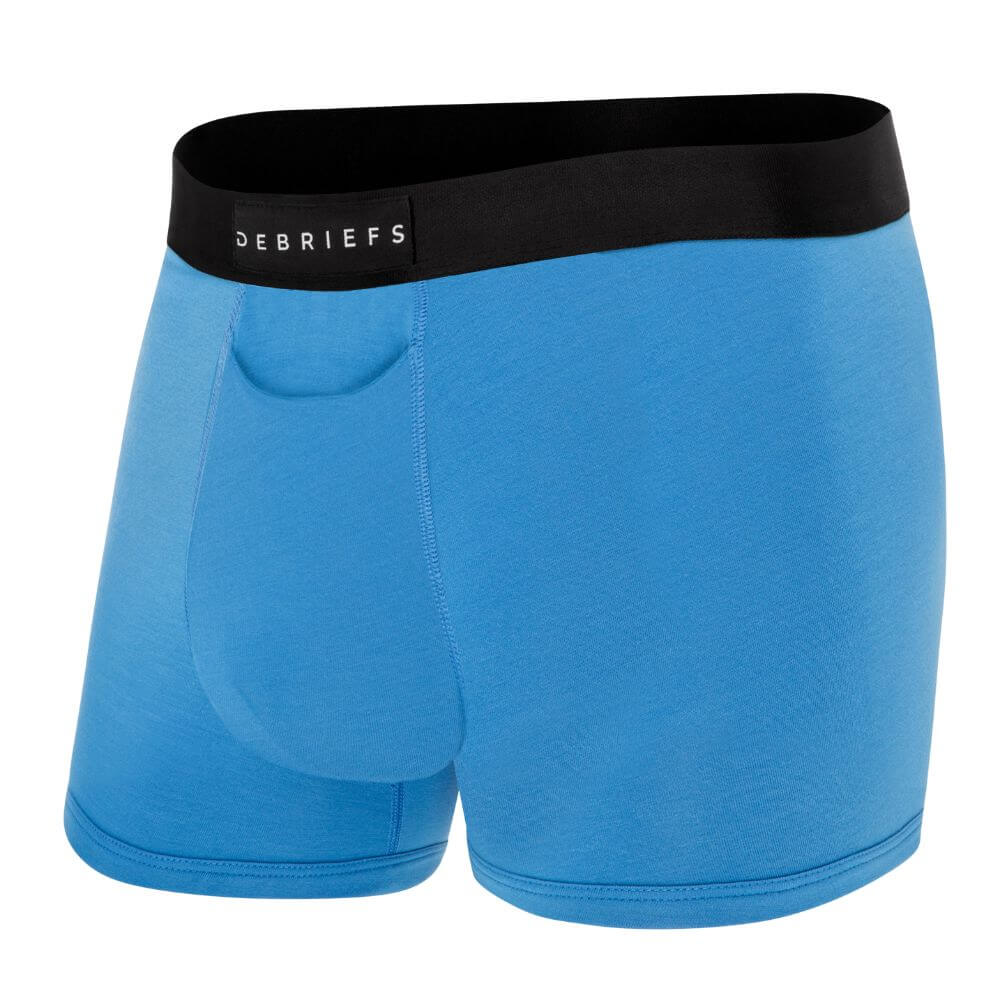
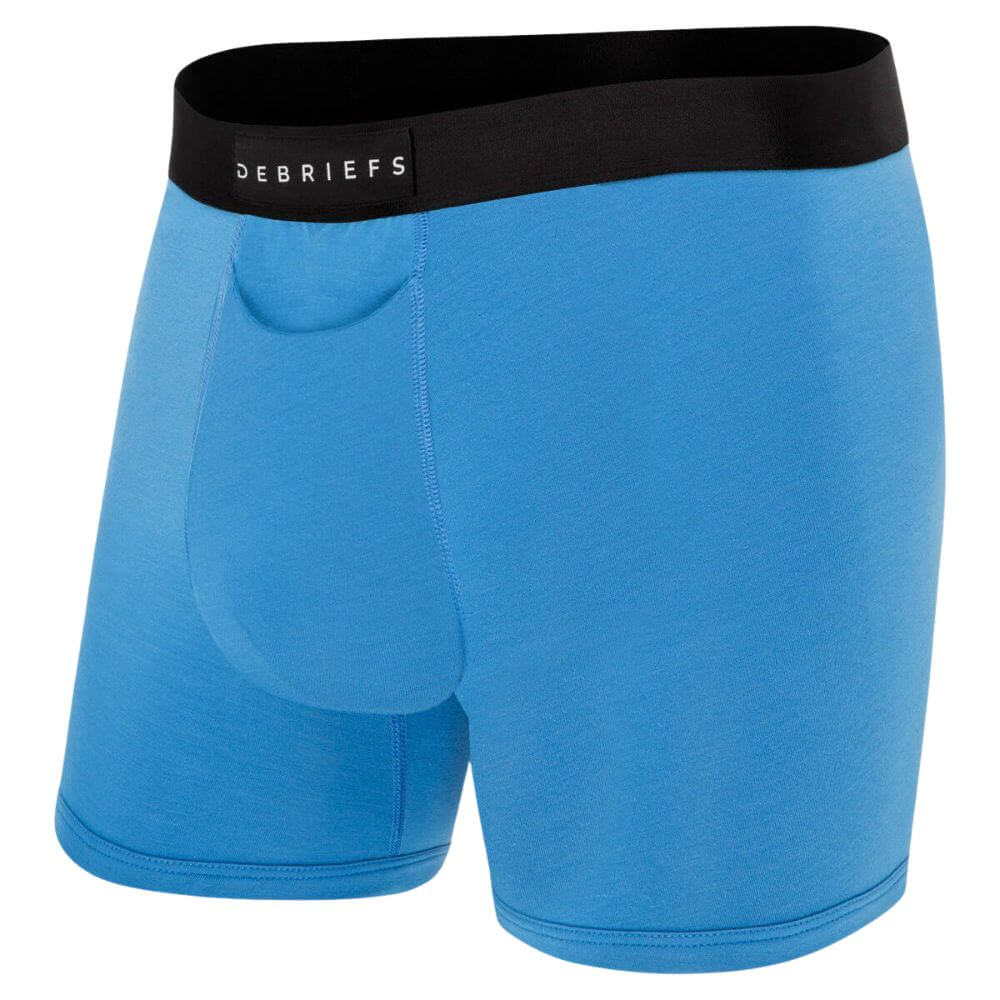
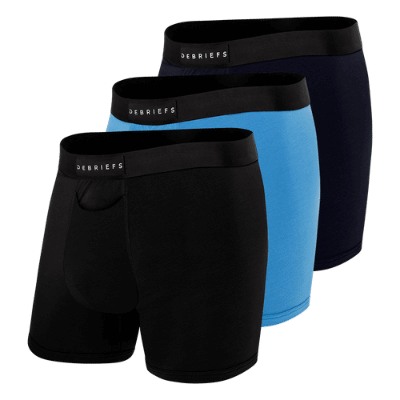
Start with style. Trunks for slimmer builds, desk jobs, and fitted clothing. Boxer briefs for active days, larger thighs, or anyone who prefers more coverage. When you genuinely don't know, trunks are the safer starting point. Most men who think they prefer loose boxers discover they were just tolerating the wrong fit, not that they had an actual preference.
The fabric is MicroModal, if you want to tell him. Austrian beechwood. Three times softer than cotton, wicks moisture properly, nothing like the cotton he's probably wearing now. Doesn't pill, doesn't sag at the waist, doesn't harden after six months of washing. The kind of thing he won't buy for himself because he doesn't know it exists yet, and has no particular urgency to find out.
First pair is guaranteed. Love them or they're free. We offer it because the barrier to trying something new is real, and we'd rather remove it entirely than leave it there.
He'll figure out the difference on day one. They all do.
Frequently Asked
- Is underwear actually a good gift for him?
- Consistently one of the best-received gifts men get. Not because it's exciting on paper, but because the gap between what most men have and what's available is enormous. And they would never close that gap themselves.
- Trunks or boxer briefs?
- Trunks if he's slimmer through the thigh, mostly desk-based, or wears fitted clothing. Boxer briefs if he's more active, bigger through the legs, or prefers more coverage. Unsure? Trunks.
- How do I know his size?
- Waist measurement, or whatever's on the label of his current underwear. S/M/L/XL maps directly to waist range. Between sizes, go larger.
- What if he says he doesn't care about underwear?
- He will. That indifference is almost always the absence of a good reference point, not a genuine preference for mediocre ones.
- What if he doesn't like them?
- First pair is guaranteed. Love them or they're free.